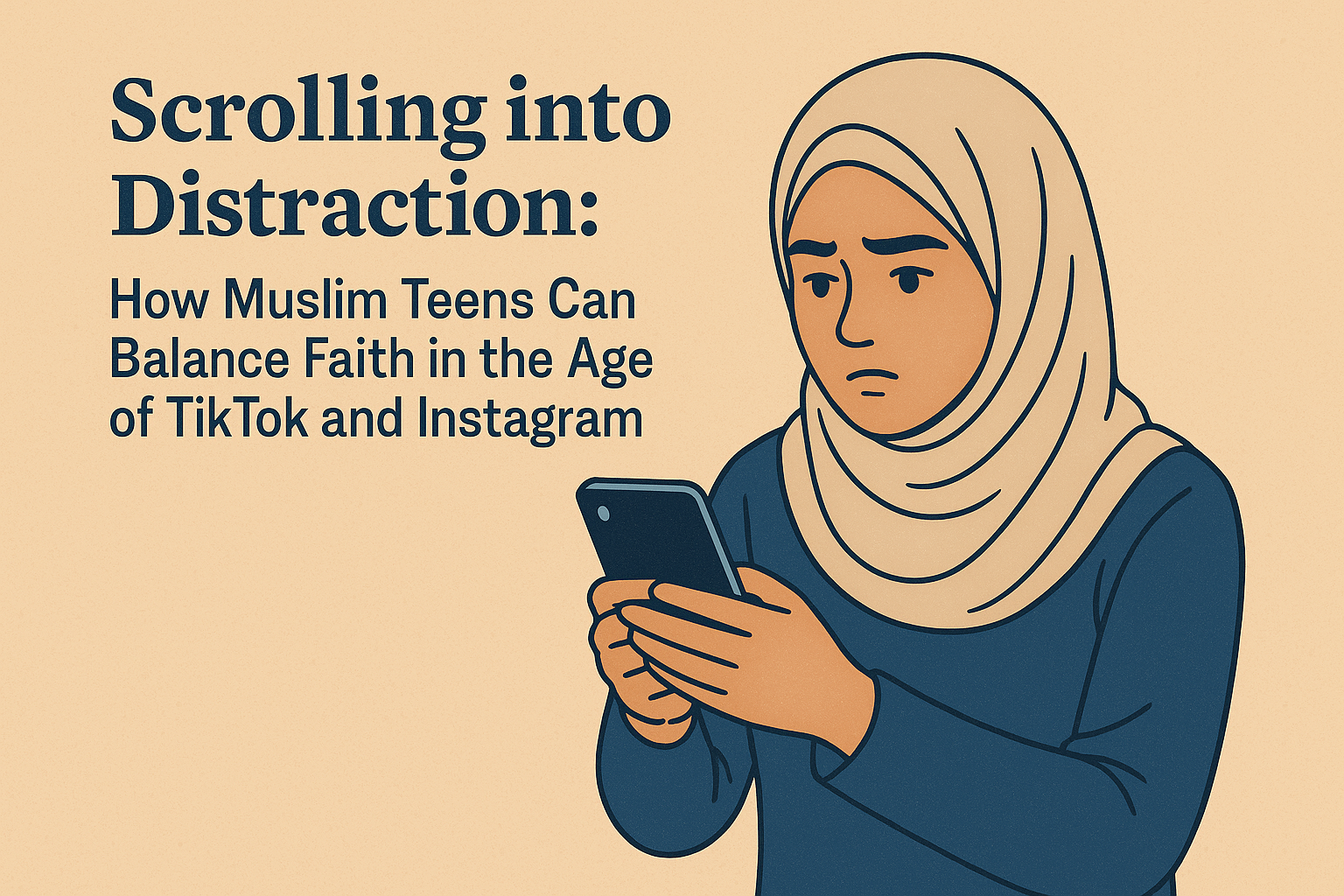
Scrolling into Distraction: How Muslim Teens Can Balance Faith in the Age of TikTok and Instagram
Focus Keyword (Primary): islam and social media
Secondary Keywords: Muslim teens, digital distraction, TikTok and Instagram, balance faith online, Islamic time management, Muslim youth and technology
Permalink / Slug: islam-and-social-media-muslim-teens-balance-faith
SEO Title (≤60 chars): Islam & Social Media: Muslim Teens Balancing Faith
Meta Description (145–160 chars): Muslim teens face endless scrolling. Learn practical, faith-based steps to balance TikTok/Instagram with salah, Qur’an, and real-life connection.
—
Table of Contents
1. The Hook: Connected to the World, Disconnected from Allah?

2. The Digital Reality for Muslim Teens
3. Islam’s Lens on Time, Attention, and Heart
4. The Double-Edged Sword of TikTok & Instagram
5. Seven Practical Steps to Balance Faith Online
6. Parents, Mentors, and Mosques: Building a Support Net
7. Quick Wins: A One-Week Mini Plan
8. Common Challenges (and How to Respond)
9. FAQs
10. Conclusion: Scroll With Purpose, Not in Loss
—
Connected to the World, Disconnected from Allah?
The phone lights up. A reel turns into ten. The adhan passes, then the prayer. Sound familiar?
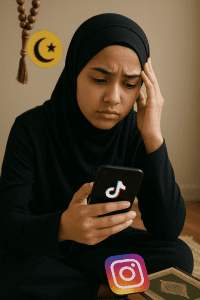
For many Muslim teens, social media is fun, fast, and constant. Yet constant is not the same as good. The question is not “Is TikTok halal or haram?” The better question is: How do we use it with taqwa, ihsan, and balance?
This post offers a simple path. You’ll get an Islamic lens, practical steps, and a one-week plan you can start today.
—
The Digital Reality for Muslim Teens
TikTok, Instagram, and YouTube shorts compete for your attention every second.
Algorithms reward speed, novelty, and emotion.
That can boost creativity and connection. It can also drain focus, sleep, and spiritual energy.
Key tension: We want to be online and on the Sirat al-Mustaqim. That means boundaries, intention, and habits that respect your salah, Qur’an, and family.
—
Islam’s Lens on Time, Attention, and Heart
Time is a trust. “By Time, surely mankind is in loss.” (Surah Al-‘Asr)
Youth is a blessing. Before your energy fades, fill your days with deeds that last.
Guard the heart. Content shapes thoughts, and thoughts shape actions.
Bottom line: The digital world is a tool. Tools reflect intention. When you scroll with dhikr in mind and adab in practice, the same phone can become a ladder, not a trap.
—
The Double-Edged Sword of TikTok & Instagram
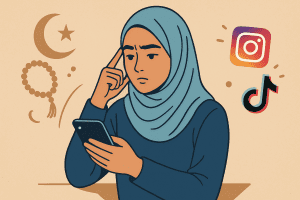
The Upside
Instant access to reminders, tafsir clips, and Arabic learning.
Global ummah connection (study buddies, charitable causes, Qur’an circles).
Creative outlets: spoken word, nasheeds, design, coding, photo/video.
The Downside
Endless scrolling steals barakah from your day.
FOMO, comparison, and body image pressure hurt self-worth.
Exposure to haram content numbs the heart and distracts from salah.
“Always online” can replace family, mosque, and real friendships.
Takeaway: Keep the upside. Fence the downside.
—
Seven Practical Steps to Balance Faith Online

1) Start with Niyyah and a Plan
Set your intention before opening any app: “I’m here to learn, connect, or create khayr.”
Decide your purpose + time limit in one sentence:
> “10 minutes to check messages and save one beneficial reminder.”
2) Build Salah-First Time Blocks
Anchor your day with salah. Designate phone-free windows before and after each prayer (e.g., 10 minutes before, 10 minutes after). This protects khushuʿ and reflection.
Pro tip: Put the charger in another room during salah times.
3) Curate Your Feed (Ruthlessly)
Unfollow accounts that waste time or provoke envy.
Follow Qur’an, seerah, Arabic, and wellness creators who uplift you.
Save beneficial posts to a “Deen Boost” collection you review weekly.
4) Use Tech to Tame Tech
Set app timers (iOS Screen Time / Android Digital Wellbeing).
Hide addictive apps in a folder on the last screen.
Turn off non-essential notifications.
Use grayscale mode during study hours.
5) Replace, Don’t Just Remove
When you cut 30 minutes of doom-scrolling, fill that gap on purpose:
10 minutes of Qur’an.
10 minutes walking with dhikr.
10 minutes reading seerah or a wholesome book.
6) Make the Phone Serve Real Life
Join or start a local youth halaqah; use social to coordinate, not replace it.
Use your skills for khayr: design posters for the masjid, edit khutbah clips, tutor juniors.
7) Weekly Digital Detox (Micro-Sabbath)
Pick one half-day each week as a low-screen block: after Jumuʿah or Sunday afternoon. Tell friends in advance so you don’t feel guilty stepping away.
—
Parents, Mentors, and Mosques: Building a Support Net
For Parents & Mentors

Lead with empathy, not lectures. Ask: “What do you enjoy online? What drains you?”
Co-create rules: study-first, salah-first, phone-off at night.
Praise progress, not only perfect results.
For Mosques & Youth Leaders
Offer offline creative spaces: photography clubs, coding circles, spoken-word nights.
Teach digital adab, privacy, and safety (bullying, scams, oversharing).
Invite young creators to showcase halal content at community events.
—
Quick Wins: A One-Week Mini Plan
Day 1 (Reset):
Delete 10 distracting follows.
Set timers: 20 min TikTok, 20 min Instagram.
Make a “Deen Boost” collection.
Day 2 (Anchor):
Phone-free windows around each salah.
Night charging outside the bedroom.
Day 3 (Replace):
Swap one scroll session for 2 pages of Qur’an.
Walk 15 minutes with dhikr.
Day 4 (Create):
Post one beneficial thing: a hadith card, study tip, or charity link.
Day 5 (Connect):
Message your local imam or youth lead about a teen meet-up.
Invite a friend to attend.
Day 6 (Detox):
Half-day low-screen block. Journal what changed.
Day 7 (Review):
What helped? What hurt? Adjust timers. Plan the next week.

Common Challenges (and How to Respond)
“I keep missing my limit.”
Use a physical timer. When it rings, close the app and stand up. Movement breaks the loop.
“My friends expect instant replies.”
Set a status: “Study/Salah — replies later.” Real friends will respect boundaries.
“I slip into haram content.”
Block, mute words, and reset the algorithm by engaging only with halal content for a week. Increase Qur’an time after Fajr to strengthen the heart.
“I feel left out when I log off.”
Plan an offline activity. Connection grows best face-to-face: sports, tea at the masjid, study circles.
—
FAQs
Q1: Is social media haram for Muslim teens?
A: Social media is a tool. The ruling depends on use and content. Guard your eyes, your time, and your heart. Prioritize salah and avoid what Allah forbids.
Q2: How much screen time is okay?
A: Enough that it doesn’t harm your salah, studies, sleep, or family ties. Start with daily caps (e.g., 40–60 minutes total) and adjust based on results.
Q3: What if my schoolwork requires being online?
A: Use focus modes and app blockers during study. Keep entertainment apps off your study device.
Q4: How do I deal with FOMO?
A: Remember: you will never see everything online. Choose what serves your dunya and akhirah. Replace scrolling with goals that matter.
Q5: What are some beneficial accounts to follow?
A: Look for Qur’an reciters, Arabic teachers, fiqh summaries from qualified scholars, Muslim mental-health educators, and student productivity channels. (Review credibility before following.)
—
Conclusion: Scroll With Purpose, Not in Loss
TikTok and Instagram are powerful. But so are you. Put salah first. Curate your feed with taqwa. Use tech to protect your time, not steal it. Be the generation that scrolls with purpose and brings barakah back into every day.
Call-to-Action:
Try the One-Week Mini Plan and share what changed for you.
Comment with one boundary you’ll set today.
Share this post with a friend who’s ready to trade doom-scrolling for khayr.