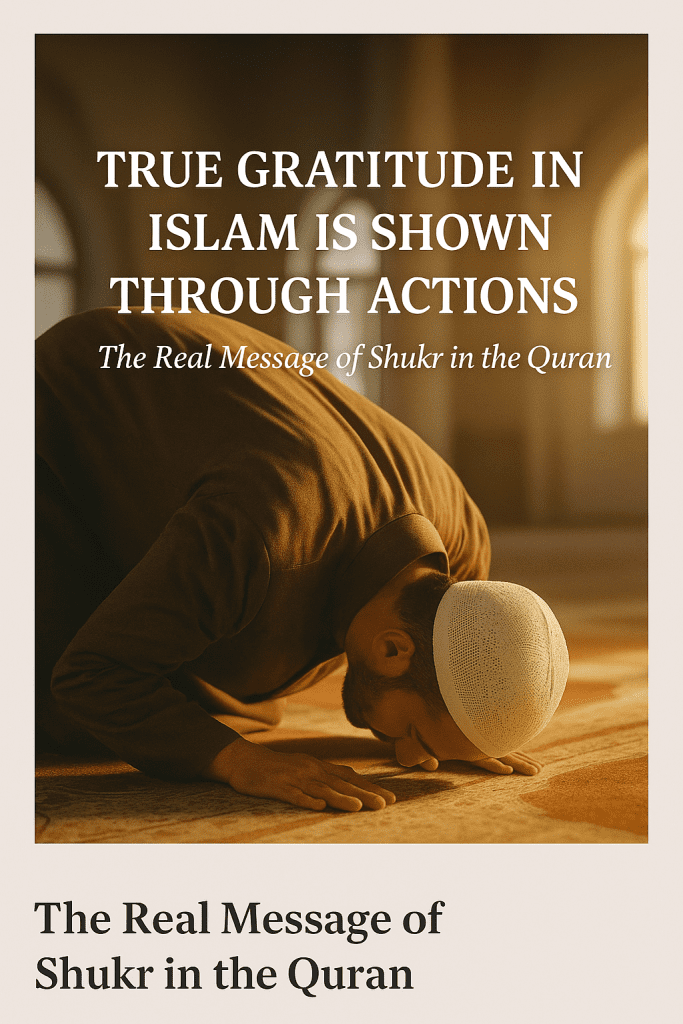

Gratitude — shukr in Arabic — is one of the most powerful spiritual states a believer can cultivate. It’s often associated with uttering “Alhamdulillah,” but in truth, Islam teaches that gratitude goes far deeper than verbal acknowledgment. True shukr is not merely expressed on the tongue; it’s reflected through a believer’s deeds, sincerity, and steadfast obedience to Allah.
The Quran repeatedly reminds us that gratitude must be lived, not just spoken. It’s a way of life, a continuous submission to the divine will — a reflection of faith in action.
The Quran connects gratitude directly with ‘amal — actions. In Surah Saba (34:13), Allah says:
“Work, O family of David, in gratitude.”
This verse doesn’t command us to simply say thanks but to act gratefully. Gratitude, in the Quranic sense, is about expressing appreciation through righteous conduct and obedience.
Gratitude in Islam is intertwined with faith (iman) and action (‘amal salih). Words may express recognition, but actions prove sincerity.
The Prophet Muhammad ﷺ embodied gratitude through every fiber of his being. Despite his exalted status and forgiveness from Allah, he would stand in prayer long into the night until his feet swelled. When asked why, he replied:
“Should I not be a grateful servant?” (Sahih al-Bukhari)
His gratitude wasn’t about uttering thanks — it was about showing it through worship, humility, and service.
For the Prophet ﷺ, gratitude meant:
Obeying Allah fully.
Serving creation selflessly.
Remaining steadfast in trials.
Recognizing blessings and using them rightly.
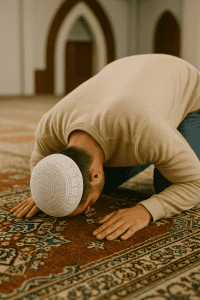
In Arabic, Islam itself means submission — and this submission is the highest form of gratitude. To submit to Allah’s commandments is to acknowledge His wisdom and generosity. When a believer performs Salah, gives Zakah, fasts in Ramadan, or fulfills their duties toward others — these actions manifest gratitude.
Gratitude isn’t complete until it transforms our behavior.
It means saying “thank You, Allah” by:
Praying regularly.
Speaking kindly.
Helping the needy.
Resisting sin.
Fulfilling one’s obligations faithfully.
Saying “Alhamdulillah” without acting upon it is like admiring light but refusing to walk in it. True gratitude demands consistency — in prayer, honesty, humility, and service.
Allah says in Surah Ibrahim (14:7):
“If you are grateful, I will surely increase you [in favor].”
This verse is both a promise and a reminder: gratitude that brings increase is gratitude that’s shown in deeds.

Gratitude begins with awareness — realizing every breath, opportunity, and hardship is from Allah. But awareness must evolve into response. A grateful heart naturally propels the believer toward obedience.
When you recognize Allah as the source of all blessings, your heart bends in humility and your hands move in service. This connection between awareness and action is the spiritual engine of gratitude.

One of the purest ways to express gratitude to Allah is by serving His creation. The Prophet ﷺ said:
“The most beloved of people to Allah are those who are most beneficial to others.” (Al-Mu’jam al-Awsat)
Helping a neighbor, feeding the hungry, or forgiving someone — all these are acts of shukr. Gratitude becomes complete when it ripples outward into kindness and compassion.
Every act of worship is a thank-you to the Creator. Prayer, fasting, charity, and patience are all forms of shukr. Even enduring hardship with faith is gratitude, because it reflects trust in Allah’s wisdom.
In essence, gratitude in Islam is worship in motion — a constant, embodied remembrance of Allah’s mercy.
Merely uttering “thank you” or “Alhamdulillah” without letting it transform our actions risks hypocrisy. The Quran warns against those who speak of faith but fail to live by it. True gratitude must move from the lips to the limbs — to the heart, hands, and habits.
Here are ways to translate gratitude into action:
Pray with presence – Make Salah your daily expression of thanks.
Give generously – Share what you love most.
Speak good – Use your tongue for truth and kindness.
Obey Allah fully – Even when it’s difficult.
Serve humanity – Every act of service is gratitude in action.
Q1: What is the difference between saying Alhamdulillah and showing gratitude?
Saying “Alhamdulillah” expresses gratitude verbally, but showing gratitude means aligning your behavior and choices with Allah’s guidance.
Q2: Can gratitude exist without action in Islam?
No. Gratitude must be shown through obedience and good deeds. Words without action are incomplete in the Islamic sense.
Q3: Why is obedience considered the essence of gratitude?
Because true gratitude recognizes Allah’s authority and expresses thanks by fulfilling His commands.
Q4: How can I make my gratitude more sincere?
Reflect daily on your blessings, perform good deeds, and act with humility. Sincere gratitude grows through consistency.
Q5: What happens when we live ungratefully?
Ingratitude leads to spiritual blindness. When we forget to act gratefully, we distance ourselves from divine blessings.
Q6: How can we teach gratitude through example?
By living it — serving others, showing patience, praying regularly, and maintaining integrity in all matters.
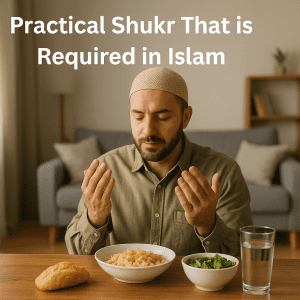
Gratitude in Islam is not a phrase — it’s a way of being. It’s the alignment of heart, speech, and action in humble submission to Allah. When we obey, serve, and love as He commands, our lives themselves become a living “Alhamdulillah.”
The real essence of gratitude isn’t what we say, but what we do