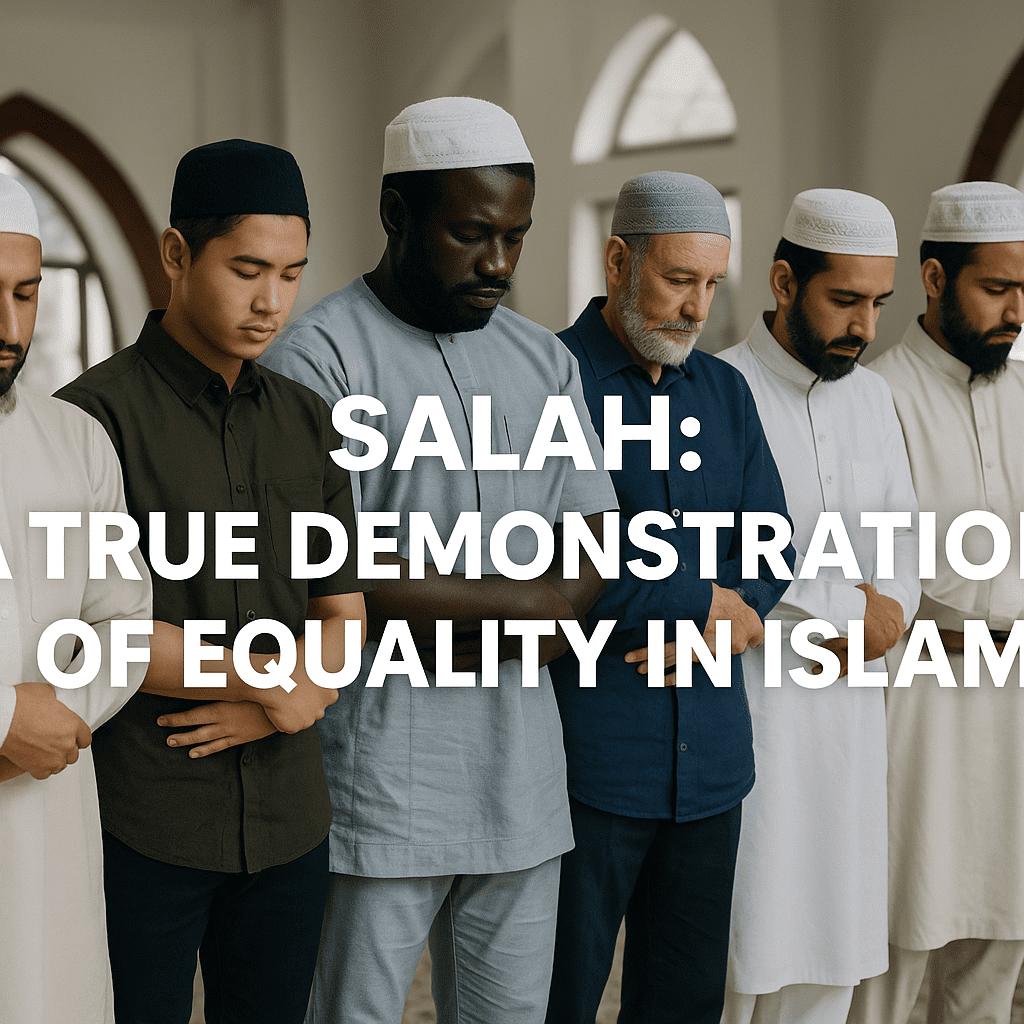
In a world where differences often divide people, Islam presents a remarkable vision of unity and equality. One of the most profound manifestations of this equality is found in Salah (prayer).
Salah is not only a pillar of faith but also a living example of how Islam erases distinctions of race, wealth, nationality, and social status. When Muslims stand shoulder to shoulder in prayer, they demonstrate to the world that before Allah, all are equal.
 The Meaning and Purpose of Salah in Islam
Salah is the formal prayer prescribed for Muslims, performed five times a day. It is a direct link between a believer and the Creator, serving as a constant reminder of faith, humility, and purpose.
Beyond its ritual form, Salah cultivates discipline, inner peace, and a sense of belonging to something greater than oneself. It binds Muslims around the world through a shared rhythm of worship, uniting hearts in a single purpose — submission to Allah.
When the call to prayer (Adhan) is heard, Muslims gather in mosques and form straight rows. The king stands beside the servant, the wealthy beside the poor, the young beside the old. There are no reserved spots, no distinctions in rank. All are equal before Allah, facing the same Qiblah (direction of prayer).
Prophet Muhammad ﷺ said:
“Indeed, Allah does not look at your appearance or wealth, but rather He looks at your hearts and deeds.”
This powerful hadith emphasizes that true worth in Islam is not determined by worldly standards but by sincerity and righteousness.
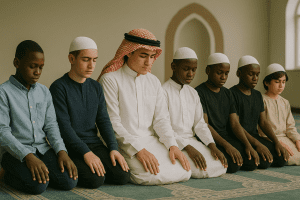
Performing Salah in congregation magnifies its spiritual rewards and strengthens bonds within the community. It teaches cooperation, humility, and compassion, reminding believers that they are one Ummah (nation) under one Creator.
Every Muslim faces the same direction — the Ka‘bah in Makkah. This shared orientation is a symbol of unity, a visual representation that despite differences, all hearts are directed toward the same divine truth.
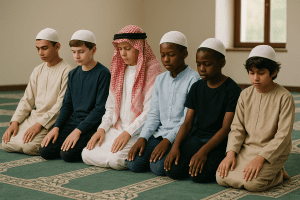
In the mosque, the CEO prays next to the janitor, the scholar next to the laborer. No one is superior. This simple yet powerful act dissolves the invisible walls of prejudice and reminds everyone that all human beings share the same origin — created by Allah from clay.
The Prophet ﷺ exemplified equality in every aspect of his life. He prayed beside his companions without distinction and emphasized that piety, not status, defines a person’s worth before Allah.
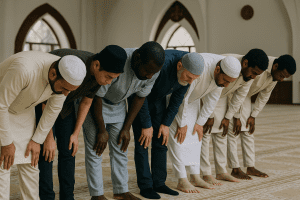
Islam honors men and women equally as servants of Allah, though their responsibilities may differ. Women are encouraged to pray, whether at home or in congregation, and their spiritual reward is identical to that of men.
Far from being excluded, women have a dignified and protected space in Salah. The Prophet ﷺ respected their participation and emphasized modesty and honor in worship, not inequality.
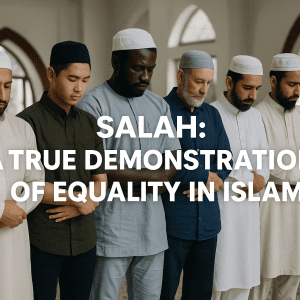
Salah trains believers to humble themselves before the Creator. Every bow and prostration erases arrogance, nurturing empathy and compassion toward others. It reminds each person that no matter their worldly rank, all are servants of Allah.
In every unit (rak‘ah) of prayer, Muslims renew their spiritual bond with Allah and their moral bond with fellow believers. It’s a rhythm of harmony that keeps the soul grounded and the heart united with humanity.
In today’s fragmented world, where people are divided by ethnicity, politics, and social class, Salah stands as a timeless act of unity. Whether in Africa, Asia, Europe, or America, Muslims turn toward the same Ka‘bah, reciting the same words — “Allahu Akbar” — God is the Greatest.
To reclaim the essence of Salah is to revive the moral equality Islam envisions — a world where compassion, justice, and brotherhood reign supreme.
Salah is not merely an act of worship; it’s a declaration of equality. Each time Muslims gather for prayer, they proclaim through action that no human being is superior to another, except by faith and righteousness.
It is the daily, living testimony that Islam is a religion of unity, equality, and divine justice.
1. Does Salah promote equality among Muslims?
Yes. Salah places all worshippers on the same level before Allah, regardless of wealth, race, or status.
2. Why do Muslims pray in rows?
Standing in straight rows symbolizes discipline, organization, and equality in devotion.
3. Are men and women spiritually equal in Islam?
Absolutely. Both are equal in the sight of Allah, and their rewards for sincere worship are identical.
4. Why do Muslims face the Ka‘bah in Salah?
Facing one direction unifies Muslims globally, symbolizing unity and shared purpose.
5. What lesson does Salah teach about humility?
Salah teaches that true greatness lies in submission to Allah, not in worldly power or wealth.
6. Can Salah help improve unity in Muslim communities?
Yes. Congregational prayer builds bonds, fosters empathy, and nurtures community cohesion.
7. What is the spiritual reward of Salah?
Salah purifies the soul, strengthens faith, and draws believers closer to Allah while uniting them with others.
Learn more about Islamic unity and equality at Yaqeen Institute.