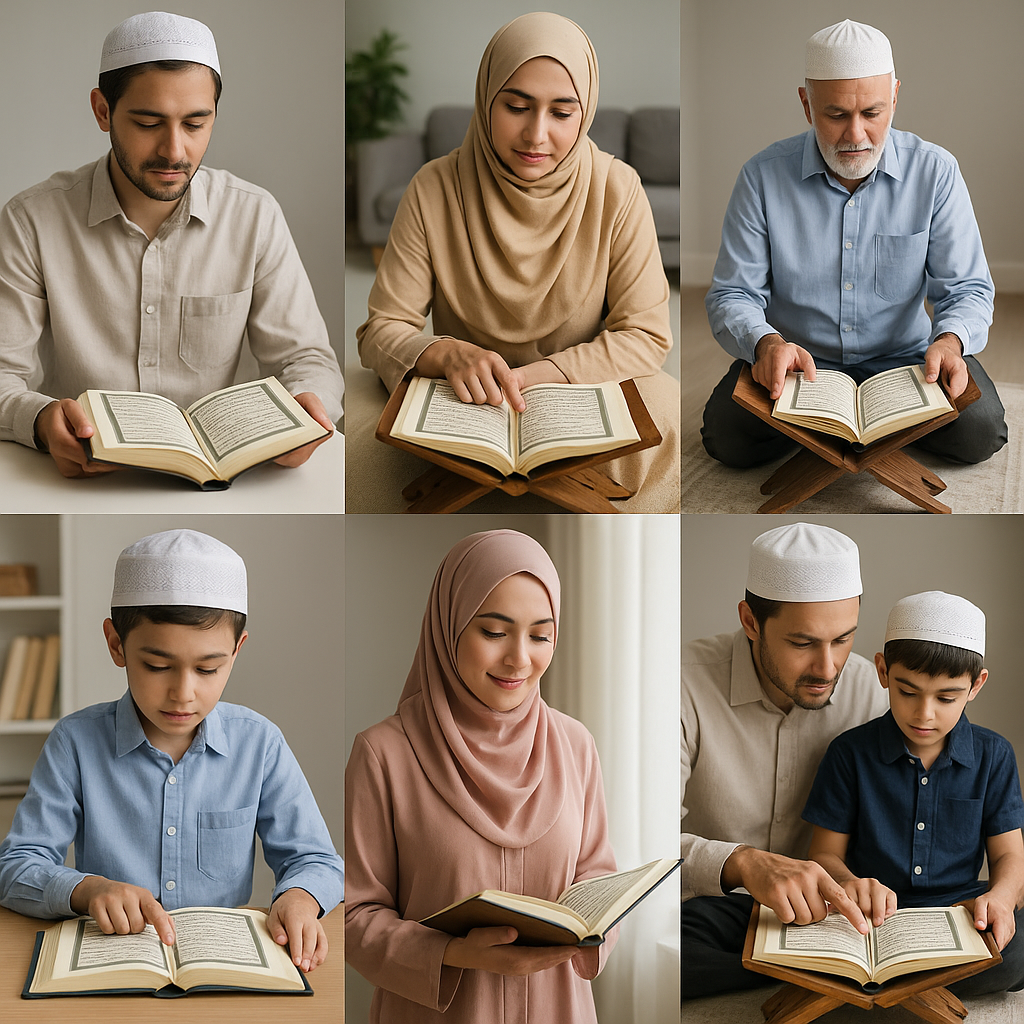
Starting your journey with the Quran is one of the most meaningful decisions a Muslim can make. Whether you’re a child, an adult, a revert, or someone returning after many years, learning the Quran opens the door to guidance, peace, and spiritual clarity. The process may feel intimidating at first, but with patience, structure, and sincere intention, anyone can learn.
The Quran is not just a holy book — it is a complete guide for life. It teaches wisdom, character, patience, mercy, and a deep understanding of our purpose. Beginning your learning journey allows you to form a personal connection with Allah’s words and live with greater mindfulness.
Every letter you learn earns reward. Even if your recitation is slow or imperfect at first, the Prophet ﷺ promised double the reward for those who struggle but continue learning. This is why How to Start Learning the Quran as an Absolute Beginner is a topic filled with hope.
Before opening a book or joining a class, take a moment to reflect on your intention. Learning the Quran should be for the sake of Allah — to grow in faith, improve your worship, and bring His words into your daily life. A sincere intention brings motivation and blessings to your learning.
Your progress depends on consistency more than anything else. Set aside a dedicated time each day — even 15 minutes makes a difference. Choose a quiet space, remove distractions, and make Quran learning part of your schedule.
To read the Quran properly, you must first understand the Arabic alphabet. Every letter has a unique sound, shape, and pronunciation point.
Arabic is precise. A slight change in pronunciation can change meaning. That’s why beginners must learn letters correctly from the very beginning to avoid mistakes later.
Here are simple and effective ways to master the alphabet:
Learn with a qualified teacher
Use the Noorani Qaida or similar primer
Practice tracing and writing letters
Use flashcards for memory
Read aloud daily to build confidence
Once you recognize letters smoothly, you’re ready for the next step.

The Noorani Qaida is the universal starting point for absolute beginners. It teaches how letters connect, how vowels work, and how to read full words.
You’ll learn:
Letter forms
Correct pronunciation
Short vowels (harakat)
Long vowels (madd)
Sukoon and shaddah
Basic reading fluency
Finishing the Qaida means you can begin reading Quranic verses confidently.
Rushing through lessons
Not practicing daily
Ignoring small pronunciation errors
Skipping revision
Depending only on apps without teacher correction
Avoiding these mistakes makes your foundation stronger.

Tajweed rules help you recite the Quran beautifully and accurately. Beginners don’t need to learn every rule immediately — just a few basics.
Every Arabic letter is produced from a specific part of the mouth, throat, or lips. Learning makharij helps you pronounce letters clearly and respectfully.
Noon Sakin & Tanween rules
Meem Sakin rules
Madd (prolongation)
Ikhfa and Idgham (blending sounds)
These rules bring clarity and beauty to your recitation.
A strong teacher should have:
Proper certification
Strong tajweed
Patience and compassion
Experience with beginners
A clear teaching plan
A good teacher motivates, corrects gently, and helps you progress with confidence.
Online learning has become extremely popular due to:
Flexible schedules
One-on-one classes
Access to global teachers
Learning from home
Recorded lessons for review
Platforms like AccessQuran.com offer structured lessons for all ages.
 Practicing Easy Surahs for Confidence Building
Start with short, simple surahs such as:
Surah Al-Kawthar
Surah Al-Ikhlas
Surah Al-Falaq
Surah An-Nas
These help build fluency and strengthen your connection to salah.
Listen to the surah from a trusted reciter
Repeat each ayah several times
Practice with your teacher
Combine verses slowly
Revise daily and weekly
Small steps lead to strong results.
Listening is one of the most powerful learning tools. It helps:
Build natural rhythm
Improve tajweed instinctively
Strengthen your ear for Arabic sounds
Make memorization easier
Sheikh Saad Al-Ghamdi
Sheikh Mishary Alafasy
Sheikh Abdul Basit
Sheikh Maher Al-Muaiqly
Their clear recitation makes learning easier for beginners.
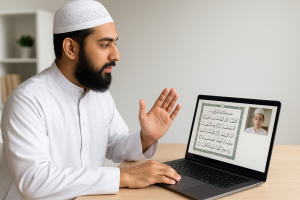 Helpful Tools and Resources for New Students
These tools support your learning:
Noorani Qaida apps
Quran Companion apps
YouTube tajweed lessons
Beginner worksheets
Quran websites for practice (e.g., Quran.com)
Use them alongside a teacher for best results.
Skipping the alphabet
Ignoring tajweed from the start
Studying inconsistently
Trying to memorize before learning to read
Relying only on digital apps
Avoiding revision
Avoiding these mistakes ensures smooth progress.
Absolutely. There is no age limit in Islam for learning the Quran.
Most beginners can read comfortably within 3–6 months with regular practice.
No — you learn Arabic reading while studying the Quran.
At least 20 minutes daily builds strong progress.
Yes, if you learn with a qualified teacher and structured lessons.
No. Fluency comes first — memorizing becomes easy afterward.
Learning the Quran is one of the greatest blessings. Whether you’re a new Muslim, a curious learner, or someone returning to their faith, the path is open to you. The key is to take small steps, stay consistent, and learn with sincerity. With the right foundation and guidance, you will soon read, understand, and connect deeply with the words of Allah