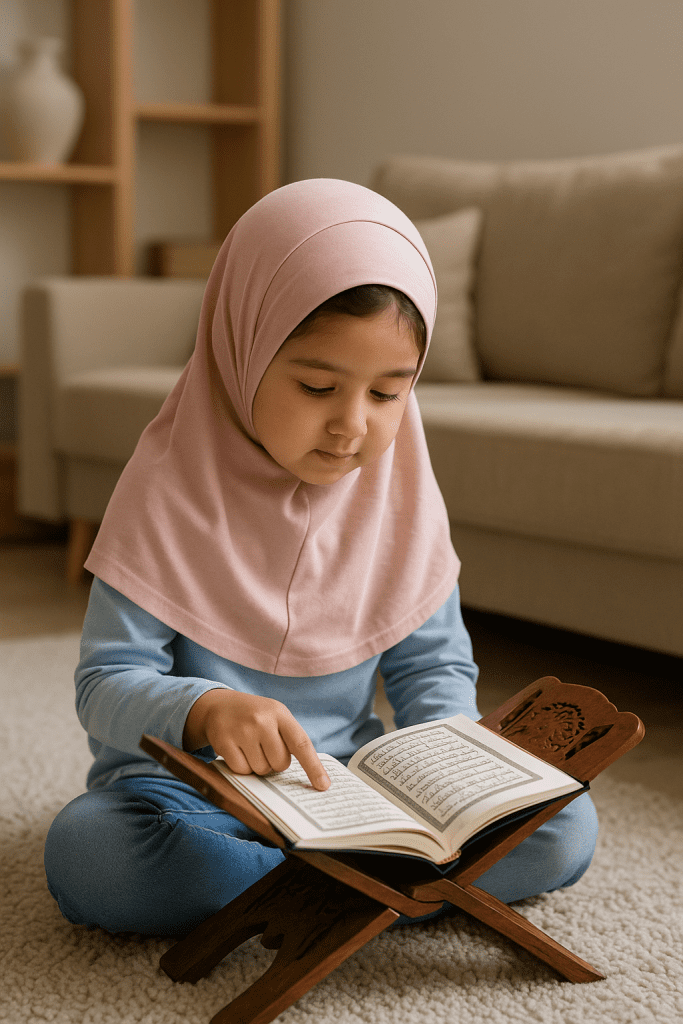
Raising a child who loves the Quran is one of the greatest blessings a parent can experience. The Quran becomes a source of guidance, comfort, identity, and strength throughout their life. But helping your child build a meaningful relationship with the Quran requires patience, consistency, and the right approach.
In this guide, we’ll explore proven methods to nurture Quran love in children — gently, naturally, and joyfully — so they grow up connected to Allah’s words.
A child’s early years shape their lifelong habits. When the Quran becomes a normal, enjoyable part of their daily routine, they associate it with peace and love rather than pressure or difficulty. Children who develop Quran affection early gain:
Strong Islamic identity
Better emotional regulation
Higher confidence
Understanding of right and wrong
Deep connection to Allah
Helping your child form a strong bond with the Quran is a gift that continues into adulthood.

Kids mirror what they see. If they see you reciting, listening, or holding the Quran with respect, they imitate that behavior.
Children connect best when Quran moments feel calm, warm, and positive. Harsh correction or pressure can create resistance.

A home that celebrates the Quran inspires children to embrace it. You can:
Keep Qurans visible and accessible
Play soft recitation in the background
Display Islamic décor with verses
Set up a small “Quran corner”
The environment shapes the heart.
Children thrive with routines. Even 10–15 minutes a day makes a huge difference. Choose a time that suits your child’s mood:
After Fajr
After school
Before bedtime
Small, consistent steps build lifelong habits.
Begin with surahs like:
Al-Ikhlas
An-Nas
Al-Falaq
Al-Kawthar
Al-Asr
These are short, meaningful, and easier to memorize. Mastery builds confidence.
Kids learn best through multi-sensory methods. Try:
Visual storybooks of Quranic themes
Apps with tajweed audio
Flashcards
Tracing worksheets
Tools keep learning fun and engaging.
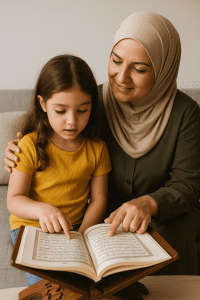
Listening builds:
Proper pronunciation
Rhythm and tarteel
Emotional connection
Recommended child-friendly reciters:
Mishary Alafasy
Saad Al-Ghamdi
Abdul Basit
Let the recitation play during quiet activities or car rides.

Children respond deeply to encouragement. Use:
Praise
Stickers
Reward charts
Small treats
Extra playtime
Positive emotions strengthen learning.
Make learning feel like play:
Memorization challenges
Tajweed coloring sheets
“Quran treasure hunt” words
Recitation competitions among siblings
When kids enjoy learning, consistency becomes natural.

Children watch more than they listen. When they see you:
Reciting daily
Reading tafsir
Treating the Quran with respect
… they follow the same behavior naturally.
Family recitation gatherings — even 5 minutes — create strong emotional bonds. Try:
Weekly family Surah review
Ramadan recitation nights
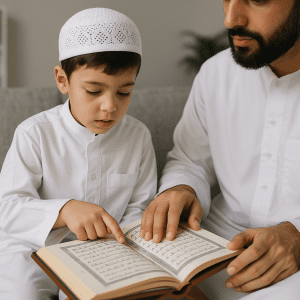
Parent-child recitation sessions
Memories shape love.

The right teacher can transform your child’s learning journey. They should be:
Patient
Kind
Gentle with correction
Skilled in child psychology
Certified in Tajweed
A supportive teacher makes the child look forward to class.
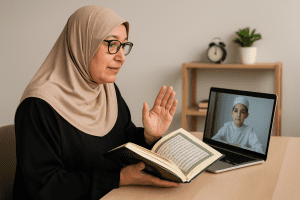
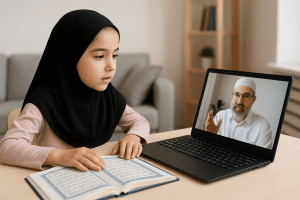
Online learning is incredibly effective for children because it offers:
One-on-one attention
Short, interactive lessons
Flexible schedules
Comfortable home environment
Faster learning due to personalized focus
Children also feel more confident in familiar surroundings.

Keep lessons short and fun. Use breaks, visuals, and interactive activities.
Motivation grows with praise, rewards, and warm emotional connection.
This is normal. Gentle correction and repeated listening help tremendously.

To ensure growth, parents should monitor:
Memorization
Pronunciation
Consistency
Confidence
Tajweed improvement
Tracking progress encourages children and helps adjust future goals.

AccessQuran.com specializes in child-friendly Quran programs.
We offer:
Certified male & female teachers
Fun, interactive lessons
Structured syllabus
One-on-one classes
Progress reports
Courses for all ages and levels
Kids learn faster when lessons are engaging and personal.
Children can start simple memorization at age 4–5.
10–20 minutes is enough for young learners.
Basic Tajweed sounds can be introduced early, with advanced rules later.
Very. One-on-one digital lessons help kids learn faster.
Gentle teachers, praise, and private online classes help build confidence.
Change the method — use games, rewards, stories, or recitation videos.
Helping your child build a strong relationship with the Quran is one of the most valuable investments you can make as a parent. With consistency, love, and the right guidance, your child will grow emotionally, spiritually, and academically through Quran learning.
If you’re ready to help your child begin this beautiful journey:

📌 Friendly, certified teachers
📌 One-on-one online classes
📌 Perfect for kids of all ages
📌 Fun, interactive, child-centered methods
📌 FREE trial class available
👉 Visit AccessQuran.com and book your child’s FREE trial class now