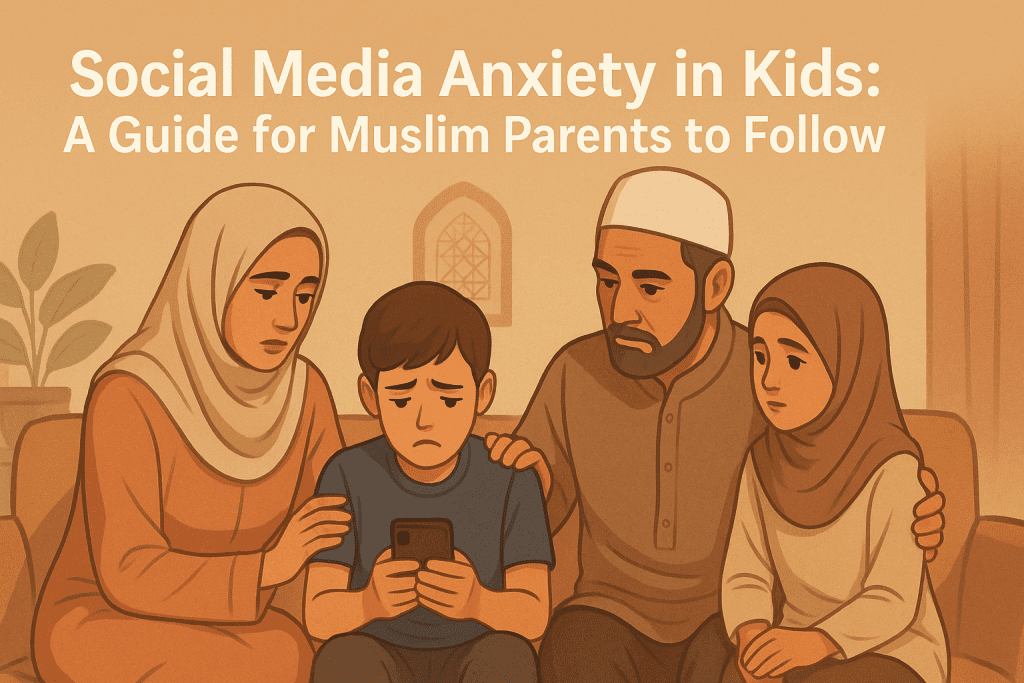
SEO Title: 10 Faith-Based Strategies to Tackle Social Media Anxiety in Kids: A Guide for Muslim Parents to Follow
Meta Description: Learn how Muslim parents can recognize, prevent, and address social media anxiety in kids using Islamic teachings, faith-based routines, and practical digital balance techniques.

In today’s hyperconnected world, children are growing up in a digital environment where social media plays a dominant role in shaping identity, confidence, and social belonging. While these platforms can offer creativity and connection, they also bring a darker side—social media anxiety in kids. For Muslim parents, addressing this issue requires not just awareness but also an approach rooted in Islamic values and mindful parenting.
Social media anxiety refers to feelings of stress, fear, or inadequacy caused by online interactions or comparisons. Children may experience it when they don’t receive enough likes, see friends socializing without them, or feel pressure to maintain an online image. This emotional burden can lead to withdrawal, irritability, or even depression.
Platforms like TikTok, Instagram, and Snapchat thrive on visual comparison. Kids often compare their appearances, achievements, and popularity with others. This creates a cycle of FOMO, where they constantly check updates to avoid feeling “left out.” Over time, this behavior fosters chronic anxiety and insecurity.
Watch for the following signs:
Constant checking of notifications
Mood swings or isolation after being online
Declining academic performance
Overthinking posts or fearing judgment
Avoiding family activities

Technology is a blessing when used wisely. Islam encourages learning and communication, but also warns against excess and heedlessness. For Muslim families, the goal isn’t to ban social media but to promote moderation and intentional use.
In Muslim cultures, modesty (haya), gratitude (shukr), and mindfulness (taqwa) are core values. These principles can guide children to use technology responsibly—avoiding harmful content, gossip, or envy online.

Children’s brains are still developing emotional control and self-esteem. Peer validation online becomes addictive because likes and comments activate dopamine, the brain’s reward chemical.
A child may equate their worth with their online popularity. When validation fluctuates, anxiety and self-doubt increase. As Muslim parents, it’s vital to reinforce the message that true worth lies in character and faith, not digital applause.
Islam teaches wasatiyyah—the principle of balance. The Qur’an says, “And thus We have made you a just community” (Surah Al-Baqarah 2:143). Excessive online use disrupts this balance. Likewise, Prophet Muhammad ﷺ advised, “Your body has a right over you,” emphasizing moderation in all things.

Remind children that Allah is always watching their actions online. Encourage them to ask themselves before posting: “Would I be proud to show this to Allah?” This mindfulness nurtures taqwa and protects from digital harm.

Notice emotional changes, sleep issues, or secrecy about social media. The earlier parents act, the easier it is to guide kids toward healthier habits.
Establish clear screen-time limits and create tech-free zones (like during meals or after Maghrib). Encourage children to fill that time with prayer, Quran reading, or family talks.
Kids often hide anxiety due to fear of punishment. Instead, foster open dialogue—listen first, guide later. Let them know that mistakes are part of learning.

Incorporate dhikr (remembrance of Allah) breaks during screen time. A few minutes of tasbeeh can restore calm and mindfulness.
Mosque youth programs, charity work, and outdoor family days can replace screen dependence with positive real-world experiences.

Share stories of the Prophets and Sahabah to highlight lessons on patience, humility, and inner peace—virtues that counteract social comparison.
The Prophet ﷺ maintained a balanced schedule of worship, work, and rest. Encourage similar patterns—morning Quran recitation, physical activity, and early bedtime—to keep children grounded.

Children imitate what they see. If parents scroll excessively, kids will too. Set the example by modeling self-restraint and conscious digital behavior.

Faith-based counselors combine psychology with Islamic principles, helping children manage anxiety without conflicting with their beliefs.
Seek therapists familiar with Islamic values. Websites like MuslimTherapists.com offer directories of Muslim professionals who specialize in youth counseling.
Q1. How do I know if my child has social media anxiety?
Look for behavioral shifts—withdrawal, mood swings, or preoccupation with online feedback.
Q2. Should Muslim parents ban social media completely?
Not necessarily. Focus on education and moderation, not prohibition.
Q3. What’s the Islamic view on social media use?
It’s permissible if used for good—learning, dawah, and connection—without promoting vanity or harm.
Q4. How can I teach my child Islamic self-control online?
By integrating dhikr, prayer breaks, and Quranic reflection into their routine.
Q5. Can social media anxiety affect my child’s faith?
Yes, excessive anxiety can weaken focus on spiritual growth. Balance restores emotional and faith harmony.
Q6. Are there any Islamic apps that promote healthy tech habits?
Yes, apps like Muslim Pro or Quranly encourage spiritual connection while limiting social distraction.

Social media anxiety in kids is real—but it’s not undefeatable. With Islamic wisdom, parental awareness, and consistent guidance, Muslim families can nurture confident, balanced, and faith-centered children. Remember, your role isn’t to shield them from technology—but to teach them how to thrive with it under Allah’s guidance