Discover how today’s generation navigates the debate over the modernization of Islam or Islamization of modernism, exploring faith, identity, and cultural balance in a rapidly changing world.
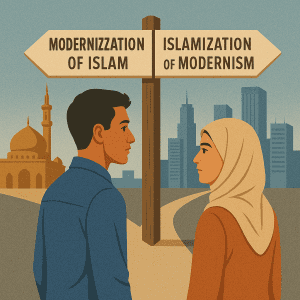
In the 21st century, Muslims across the globe find themselves standing at a delicate crossroads: Should Islam be modernized to align with today’s world, or should modernity itself be guided by Islamic principles? This ongoing debate—modernization of Islam or Islamization of modernism—has shaped intellectual, spiritual, and cultural discourse for decades.
For today’s youth, the dilemma is personal. They live in an age of social media, instant information, and global interconnectivity, yet seek spiritual depth and authenticity. The confusion doesn’t arise from faith itself but from the interpretation of faith in a modern context.
The modernization of Islam refers to adapting Islamic thought and practices to contemporary realities—rethinking jurisprudence, gender roles, governance, and ethics to make faith more compatible with modern life. Proponents argue that Islam, being a universal and timeless faith, can embrace progress without losing its essence.
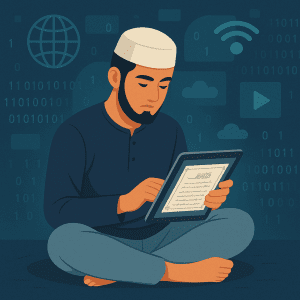
Conversely, the Islamization of modernism seeks to reform modern systems—science, politics, economics, and culture—through the moral and ethical lens of Islam. Instead of adapting religion to modernity, it calls for integrating spiritual values into modern frameworks.
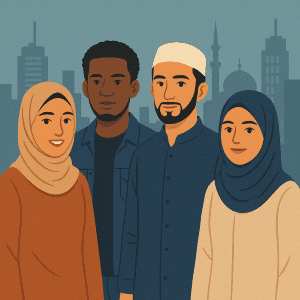
Historical Roots of the Debate
From the late 19th century, Muslim scholars like Jamal al-Din al-Afghani, Muhammad Abduh, and Sir Syed Ahmad Khan began reinterpreting Islam to meet modern challenges. They believed Islamic civilization could regain its strength through education, rationality, and innovation—without imitating the West.
Colonialism intensified the crisis. Western ideologies, material progress, and secular governance challenged traditional Muslim societies. Some saw modernization as liberation; others viewed it as spiritual erosion. The tension between modernism and tradition was born here.
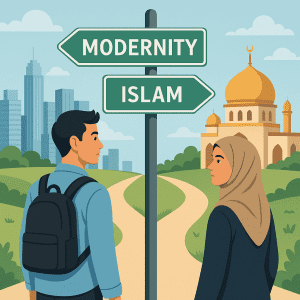
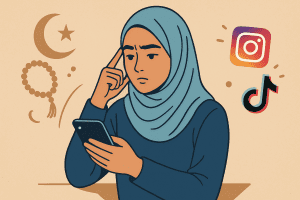
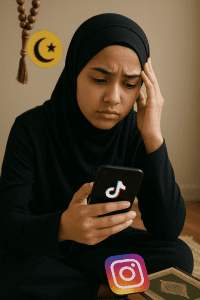
Today’s Muslim youth navigate multiple identities. Online platforms expose them to liberal thought, activism, and self-expression—but also to misinformation and moral ambiguity. The pressure to “fit in” often clashes with the desire to stay faithful.
Freedom of thought and expression is a hallmark of modernity, yet Islamic ethics emphasize moral responsibility. The challenge is not about choosing one over the other but harmonizing the two—a balance between spiritual discipline and intellectual openness.
One of the most debated issues is gender justice. While Islam historically uplifted women, interpretations over centuries have varied. Modern Muslim thinkers advocate revisiting scripture with fresh eyes—emphasizing equality rooted in Qur’anic principles, not Western mimicry.
Contrary to the myth of conflict between Islam and science, history shows deep harmony. Muslim scholars during the Golden Age—like Ibn Sina and Al-Khwarizmi—were both devout and scientific pioneers. The modern task is to revive that synergy.
Reform begins in classrooms. Integrating Islamic ethics into modern disciplines—medicine, economics, and technology—can produce a generation that is both morally grounded and intellectually competent.
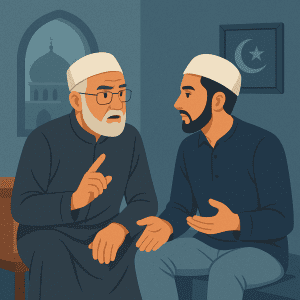
Critical reasoning (ijtihad) has always been central to Islamic scholarship. Encouraging open discussion among youth, scholars, and communities can bridge the gap between traditional ulema and modern intellectuals.
Islamic banking illustrates how faith and modernity can cooperate. Rooted in principles of fairness, transparency, and shared risk, it challenges exploitative capitalist norms while thriving globally.
Islam encourages stewardship (khilafah) of the earth. From sustainable agriculture to ethical consumption, Muslim environmental movements embody how spirituality can guide global sustainability.
From Indonesia to the UK, young Muslims are redefining what it means to live Islamically in the modern era—through art, activism, and innovation.
Social media influencers and digital scholars have created virtual mosques and learning circles, proving that technology can amplify—not dilute—faith.
Modernization doesn’t mean westernization.
Islamization isn’t regression but ethical reform.
Faith and freedom aren’t opposites—they complement each other when understood correctly.
Q1. Can Islam truly adapt to modernity without compromising its values?
Yes. Islam’s core principles—justice, mercy, and reason—are timeless and adaptable.
Q2. Is modernization a threat to Islamic identity?
Only when modernization is mistaken for moral relativism. True modernization respects ethics.
Q3. What role do scholars play in resolving this tension?
Scholars can interpret scripture contextually, bridging tradition with contemporary understanding.
Q4. How does globalization affect young Muslims’ faith?
It broadens exposure but also increases identity confusion; balance is key.
Q5. Can technology and Islam coexist?
Absolutely. Islam encourages knowledge and innovation for human benefit.
Q6. What is the “middle path” in this debate?
A synthesis—embracing progress while staying rooted in faith.
The modernization of Islam or Islamization of modernism is not a binary choice—it’s a dialogue. Today’s generation must move beyond confusion toward integration, blending the timeless wisdom of Islam with the transformative power of modernity.
As the Qur’an reminds us:
“Thus We have made you a middle nation…” (Surah Al-Baqarah 2:143)
The true success of the Muslim ummah lies not in choosing between faith and modernity, but in living both harmoniously